
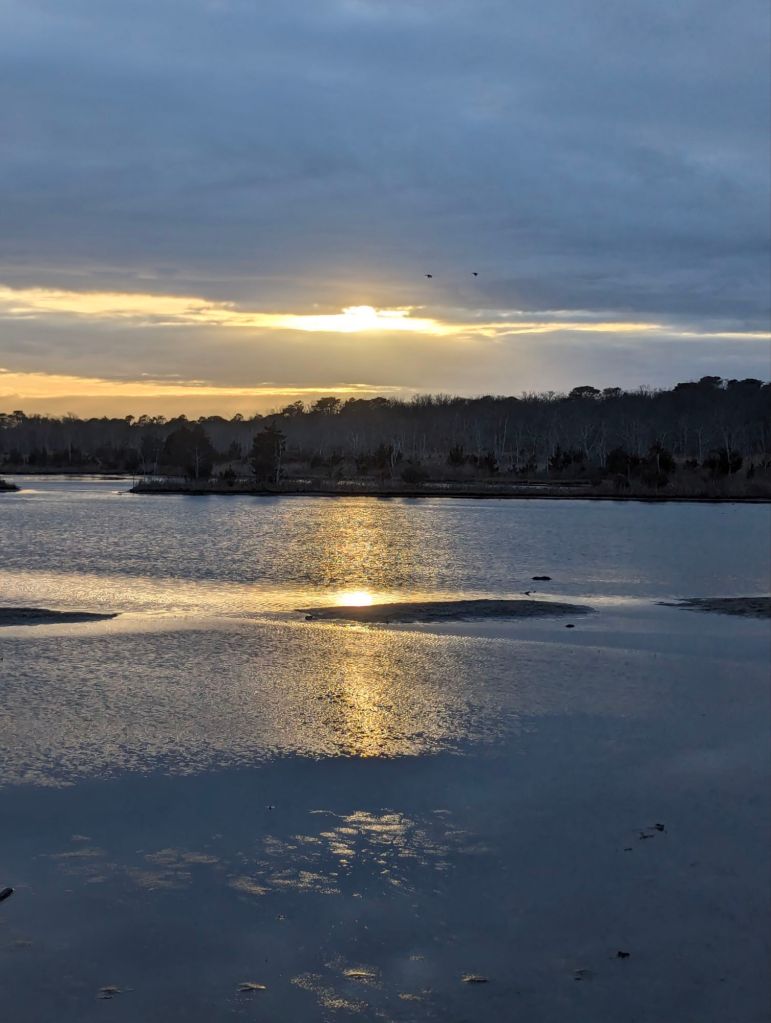
The southern part of New Jersey is a marshland – salt marshes full of life, mixed in with the highways and concrete and suburban spaces that are the world we see.
The marshes are what we don’t see. The things that pass by your window as you drive, the areas you can’t touch or don’t want to, the places you have to seek.
I’m taking a class in which the instructor pointed out there is a separation from the natural world, that we see these spaces as things to develop, see their rhythms and diversity as something expendable.
This is colonialism, and that’s not an outdated word for outdated practices, but a very real mindset that is alive and well in the U.S. – just less silent and rugswept than it once was.
I was in South Jersey for two months, in a place where these spaces still exist – encroached upon but not entirely paved over. I spent time in them, with a feeling I was remembering something I’ve never seen – a world in which nature wasn’t a park or protected area or roadside attraction, but simply the world itself. What a tragedy, I kept thinking, that I will never know that world.
I’ve also had a personal Crossing Over these last few months. There’s a point of no return that’s been moved past, and from here on, things are different. And all of this is smashing into a political sea-change, and all the betrayals that are falling on us like dominoes, and there are worlds we will never know.
So I’m wading back into this one with a clearer vision, and a heightened sense of awareness, and a little bit more grit.
There’s a reason why nature is fighting back now – some things can’t be permanently conquered.

 Notes in the Margins